
In a world of fast digital production, the classic methods of printing still hold a place of honor, especially in the realm of high-end stationery. Offset printing and Intaglio are the cornerstones of traditional stationery, offering a level of quality, tactility, and heritage that modern methods aim to replicate. These techniques are the engine behind the true custom bound notebooks industry, where the entire cover is a canvas for branding before it is even assembled.
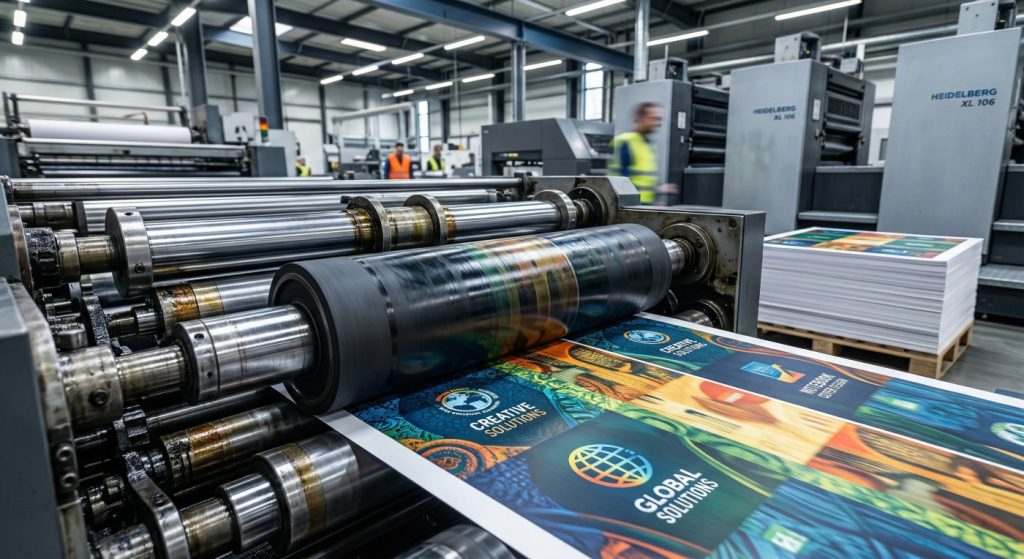
Offset Printing: The Standard for Quality and Scale
Offset printing is the workhorse of the commercial printing world, responsible for the vast majority of high-quality magazines, books, and custom packaging. The process is ingenious in its indirect approach:
- Plating: The desired image is etched onto a metal plate.
- Inking: The plate is inked, but the ink only adheres to the etched image area.
- Offsetting: The inked image is transferred (or “offset”) from the plate to a rubber blanket.
- Printing: The rubber blanket then presses the image onto the premium paper.
This indirect transfer results in an exceptionally sharp, clean image and allows for consistent, high-speed production. While traditional, it remains the modern industry standard for high-volume projects like Annual Reports or Corporate Journals where 1,000+ units are required, offering unparalleled quality and cost-effectiveness at scale.
Intaglio: The Art of Engraved Ink
If offset printing is the workhorse, Intaglio is the thoroughbred. This centuries-old technique is synonymous with the world’s finest currency, invitations, and traditional stationery. The process is one of meticulous craft:
- Engraving: A design is engraved or incised into a thick metal plate.
- Inking: The entire plate is flooded with ink, which fills the engraved recesses.
- Wiping: The surface of the plate is wiped clean, leaving ink only in the incisions.
- Pressing: A sheet of premium paper is laid over the plate and subjected to immense pressure. The paper is forced into the inky recesses, lifting the ink out and creating a final design that is slightly raised and incredibly detailed.
This process gives the final print a unique, tactile quality that cannot be replicated. The slightly raised ink and the subtle indentation of the paper around it are hallmarks of true luxury and craftsmanship.
The Heart of Custom Bound Notebooks
The key to understanding the power of these methods is realizing they happen before the notebook exists. The entire design is printed on large, flat sheets of cover material. These printed sheets are then cut, folded, and bound into the final product. This “print-then-bind” workflow is what enables a true custom cover notebook, allowing for:
- Edge-to-edge, full-bleed designs
- Perfectly registered patterns that wrap around the spine
- The use of a wide variety of specialty and premium paper stocks, including FSC-Certified paper options
| Feature | Offset Printing | Intaglio Printing |
|---|---|---|
| Process | Ink is offset from a plate to a blanket, then to paper. | Paper is pressed into an engraved, inked plate. |
| Feel | Smooth, flat ink on paper. | Slightly raised, engraved ink with a tactile feel. |
| Best For | High-volume, high-quality full-color cover printing. | Ultra-premium, single-color crests and wordmarks. |
| Cost | Cost-effective at very large scales (1000+ units). | Very high-end, with significant setup and per-piece costs. |
Pro Tip: Intaglio vs. Debossing
While both methods use a metal die to create an impression, their primary purpose is different. Intaglio is an additive process focused on applying raised ink to the paper. Debossing is a subtractive process focused on creating a blind (inkless) indentation in the paper itself. They can even be used together for a highly textural, ultra-premium result.
Conclusion
For brands seeking to create truly bespoke stationery with a sense of heritage and permanence, offset printing and Intaglio are the definitive choices. These methods are the foundation of the custom bound notebooks industry, allowing for unparalleled design freedom on premium paper. Choosing this path is a commitment to traditional stationery values, where the medium itself is a core part of the brand message.


